Mineral Wool Insulation in Hawthorne, CA
Energy-Saving Mineral Wool Insulation for Hawthorne, CA Homes — Licensed & Insured
Expert mineral wool insulation in Hawthorne, CA. Armour Hawthorne Insulation installs fire-safe, moisture-resistant mineral wool for walls, attics & crawl spaces. Call (424) 487-4483.
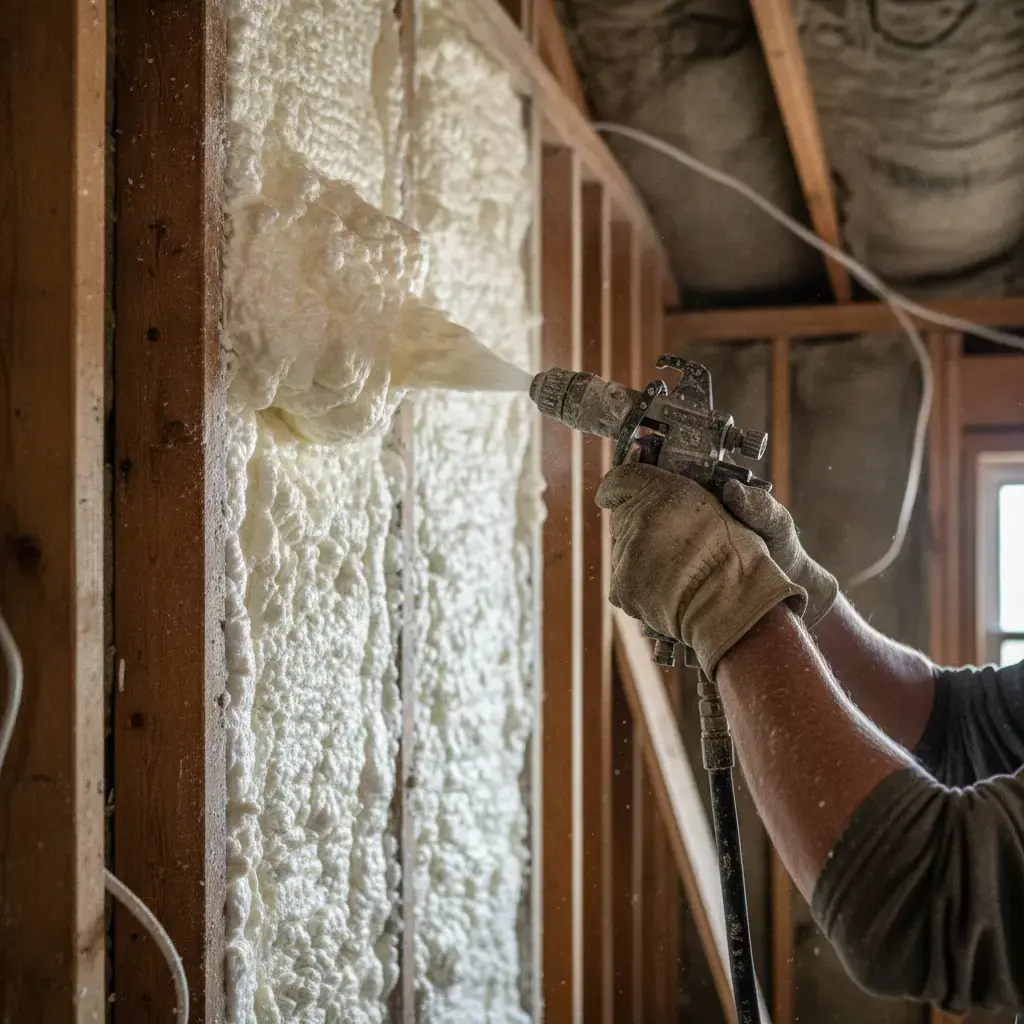
Mineral wool insulation — also known as rock wool or slag wool — is a high-performance insulation material manufactured from natural volcanic rock and recycled steel slag, spun into dense, fibrous batts and boards that deliver exceptional thermal resistance, fire protection, and acoustic control. For homeowners and businesses in Hawthorne, CA, mineral wool is increasingly the material of choice because it stands up to the coastal marine layer, the temperature swings between the cool Pacific breeze and the inland heat dome, and the fire-safety demands of Los Angeles County building codes.
At Armour Hawthorne Insulation, we specialize in mineral wool insulation installation throughout Hawthorne and the surrounding South Bay communities. Our team understands the unique construction characteristics of Hawthorne’s housing stock — from the post-war bungalows along Yukon Avenue to the modern mixed-use developments near the SpaceX corridor on Crenshaw Boulevard. Whether you need insulation in a single-family home, a multifamily complex, or a commercial facility, we bring local knowledge and professional craftsmanship to every project. Call us today at (424) 487-4483 to schedule your free assessment.
Understanding Mineral Wool Insulation
Mineral wool insulation is one of the oldest and most scientifically validated insulation materials available. Its origins trace back to the 1840s when workers in Hawaii first noticed that volcanic eruptions produced thin, glass-like fibers — later called Pele’s hair — that provided natural thermal buffering. By the early twentieth century, manufacturers in Europe and North America began industrially replicating this process, melting basalt rock and steel-mill slag at temperatures exceeding 2,900°F and spinning the molten material into interlocking fiber mats.
Today’s mineral wool products fall into two primary categories: rock wool (made predominantly from basalt) and slag wool (made from blast-furnace slag). Both achieve thermal R-values typically ranging from R-3.0 to R-3.3 per inch in batt form, and up to R-4.2 per inch in rigid board form. Crucially, mineral wool is naturally non-combustible — it does not ignite and will not contribute to flame spread, a property confirmed by ASTM E136 testing. This makes it particularly valuable under California’s Title 24 energy code and the California Building Code’s fire-resistance requirements.
Read moreShow less
Beyond thermal performance, mineral wool excels at sound transmission class (STC) ratings. Dense-packed mineral wool batts in a standard 2×4 wall cavity can achieve STC ratings of 45 to 52, making it a preferred choice for interior partition walls, home theaters, and multifamily buildings where tenant noise separation is regulated. Its semi-rigid structure also resists settling over time — unlike loose-fill fiberglass — meaning the R-value you install on day one is largely the R-value you still have a decade later.
In Hawthorne, mineral wool is found across a wide range of building types: single-family residential homes built between the 1940s and 1970s that are undergoing energy retrofits, newer construction townhomes in the Hawthorne Plaza redevelopment area, tilt-up commercial warehouses near the Hawthorne Municipal Airport (HHR) flight corridor, and multifamily apartment buildings along Prairie Avenue. Its versatility across wall cavities, attic decks, crawl spaces, and exterior continuous insulation applications makes it a comprehensive solution for virtually any structure in the area.
Why Mineral Wool Insulation Is Needed in Hawthorne, CA
The Marine Layer and Moisture Intrusion
Hawthorne sits approximately 4.5 miles from the Pacific coastline at Hermosa Beach. The persistent marine layer — locally called “June Gloom,” though it frequently extends from May through August — deposits consistent overnight moisture on exterior surfaces. Average relative humidity in Hawthorne hovers between 70% and 85% during morning hours in summer months. Over time, this moisture migrates through wall assemblies and into insufficiently protected attic and crawl space cavities. Standard fiberglass batts absorb this moisture and lose R-value — studies from Oak Ridge National Laboratory show wet fiberglass can lose up to 40% of its rated R-value. Mineral wool, by contrast, is hydrophobic: its fibers repel water, and the material retains 98% or more of its thermal performance even when exposed to incidental moisture. For Hawthorne homes, this difference is measurable on energy bills and in the longevity of the insulation system.
Temperature Differential and Energy Code Compliance
While Hawthorne’s coastal proximity moderates temperatures, the city still experiences a meaningful diurnal temperature swing. Summer afternoons regularly reach 85°F to 92°F — particularly in the inland-facing neighborhoods east of Inglewood Avenue — while nighttime lows drop to 60°F to 65°F. California’s Title 24 Part 6 energy code, updated in the 2022 code cycle, now requires minimum R-13 wall insulation and R-38 attic insulation for Climate Zone 8, which covers Hawthorne. Older homes built before 1978 — which constitute a substantial portion of Hawthorne’s housing stock — frequently have R-11 fiberglass batts or no insulation at all in their 2×4 wall cavities. Upgrading to mineral wool provides a cost-effective path to Title 24 compliance without requiring wall re-framing.
Airport Noise Corridor
Hawthorne Municipal Airport (FAA identifier HHR) generates a measurable noise environment across the neighborhoods of Bodger Park, Holly Glen, and the residential blocks immediately north of the airport boundary along 120th Street. The Federal Aviation Administration’s 2019 Noise Exposure Map for HHR identified day-night average sound levels (DNL) of 65 dB or higher affecting roughly 1,200 residential parcels. For residents in this corridor, standard fiberglass insulation provides minimal acoustic attenuation — typically STC 35 in a wood-frame wall. Upgrading to 3.5-inch mineral wool batts can push that STC rating to 47 or higher, a difference that is clearly perceptible and can meaningfully improve sleep quality and interior comfort.
Wildfire Smoke and Air Quality Events
Los Angeles County’s increasing wildfire frequency — including the Woolsey Fire (November 2018), the Creek Fire (September 2020), and the January 2025 Palisades Fire — creates periodic air quality emergencies that drive AQI readings in Hawthorne to 150 (Unhealthy) or above. Homes with poorly insulated and air-sealed envelopes allow significant particulate infiltration. Mineral wool insulation, installed in conjunction with proper air sealing, reduces envelope leakage and limits the entry of PM2.5 particulates, providing a meaningful public-health benefit during smoke events in addition to its year-round thermal performance.
Older Construction in Hawthorne Neighborhoods
Neighborhoods like Bodger Park and the blocks surrounding Hawthorne High School contain a high density of post-World War II construction — homes built between 1945 and 1965 with shallow attic cavities, uninsulated crawl spaces, and original wall cavities that were either unfilled or filled with deteriorating loose cellulose. These structures are prime candidates for mineral wool retrofit insulation because the material’s semi-rigid batt form can be installed cleanly in irregular and older framing without the full settling risk of blown fiberglass.
Free, no-obligation estimates
Talk to Armour Hawthorne Insulation
Tell us what you need and we’ll take it from there.
Signs You Need Mineral Wool Insulation in Hawthorne
Thermal Comfort Issues
- Rooms along the east-facing walls of your home feel noticeably hotter than western rooms during summer afternoons, indicating directional heat gain from insufficient wall insulation
- Your HVAC system runs continuously for more than 20 minutes per cycle without reaching the set temperature during mild Hawthorne summer days (below 90°F)
- Floors feel cold to bare feet in the morning, especially in homes with uninsulated crawl spaces in the Holly Glen or Bodger Park neighborhoods
- Visible frost or condensation on interior wall surfaces during rare cold nights (below 45°F)
Energy Bill Indicators
- Monthly SCE (Southern California Edison) electricity bills consistently exceeding regional averages — the South Bay average for a 1,500 sq ft home runs approximately $180 to $220 per month in summer; bills above $280 suggest significant thermal envelope failure
- Year-over-year utility cost increases of 15% or more without corresponding rate hikes from SCE
Acoustic and Air Quality Signs
- Clearly audible aircraft noise from Hawthorne Municipal Airport inside rooms with windows closed
- Persistent musty odors in attic or crawl space areas, indicating moisture-laden degraded insulation
- Visible insulation sagging, discoloration, or gaps when viewed through attic access panels
- Allergy symptoms worsening indoors during regional wildfire smoke events
Our process
Our Mineral Wool Insulation Process in Hawthorne
- 01
Free On-Site Assessment (Day 1 — 1 to 2 hours)
Our certified insulation specialist visits your Hawthorne property to conduct a thorough inspection. We use a thermal imaging camera to identify cold spots, moisture intrusion, and air bypass pathways in existing wall and attic assemblies. We document existing
- 02
Scope Development and Permit Review (Days 2 to 4)
We prepare a written scope of work that specifies product selections, target R-values aligned with California Title 24 Climate Zone 8 requirements, and any required City of Hawthorne building permits. Hawthorne’s Building and Safety Division (located at 4455 W
- 03
Existing Insulation Removal (if required — Day 1 of Installation)
Where old or damaged insulation is present, our crew removes it using HEPA-filtered vacuum equipment, double-bag the material, and dispose of it in compliance with Los Angeles County waste management regulations. Learn more about our insulation removal service
- 04
Air Sealing (Day 1 of Installation — 2 to 4 hours)
Before any mineral wool is placed, we seal all penetrations, top plates, rim joists, and attic bypasses with low-expansion spray foam and mastic sealant. This step is especially critical in Hawthorne’s older wood-frame homes where decades of settling have open
- 05
Mineral Wool Installation (Day 1 to Day 2)
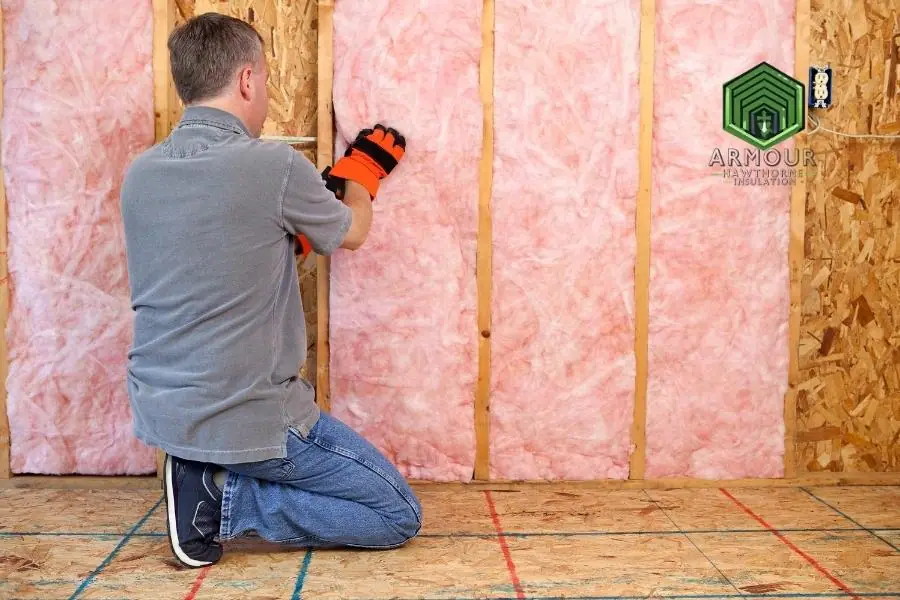
Mineral wool batts are friction-fit into wall cavities, floor joists, and attic rafter bays to the specified R-value. Our installers are trained to achieve full-fill coverage without compression, which can reduce effective R-value. For attic applications, we o
- 06
Inspection and Quality Check (Day 2 — 1 to 2 hours)
We conduct a post-installation walkthrough, photographing all completed areas. Where required by permit, we coordinate the City of Hawthorne’s insulation inspection before any drywall is closed up.
- 07
Final Reporting (Within 5 business days)
We provide a written completion report including installed R-values, product specifications, and Title 24 compliance documentation for your records and any future real estate transactions.
Mineral Wool Insulation Methods and Approaches
Batt Installation in Open Cavities
The most common application in Hawthorne residential projects. Pre-cut mineral wool batts (available in 3.5-inch R-15 and 5.5-inch R-23 thicknesses) are friction-fit into exposed wall and floor framing during new construction or major renovation. This method is used extensively in attic knee walls, bonus room additions, and garage-to-living-space conversions common in the Holly Glen neighborhood. Timeline: 300 to 500 square feet per crew per day.
Continuous Exterior Mineral Wool Board
Rigid mineral wool boards (typically 1-inch to 3-inch thickness, R-4 to R-12) are applied to the exterior sheathing of a building before cladding installation. This method is particularly effective for commercial tilt-up buildings and multifamily construction near the Hawthorne Plaza corridor, where it eliminates thermal bridging through metal studs. It also serves as a code-compliant continuous insulation layer per California Energy Code Section 140.4.
Mineral Wool in Attic Deck Applications
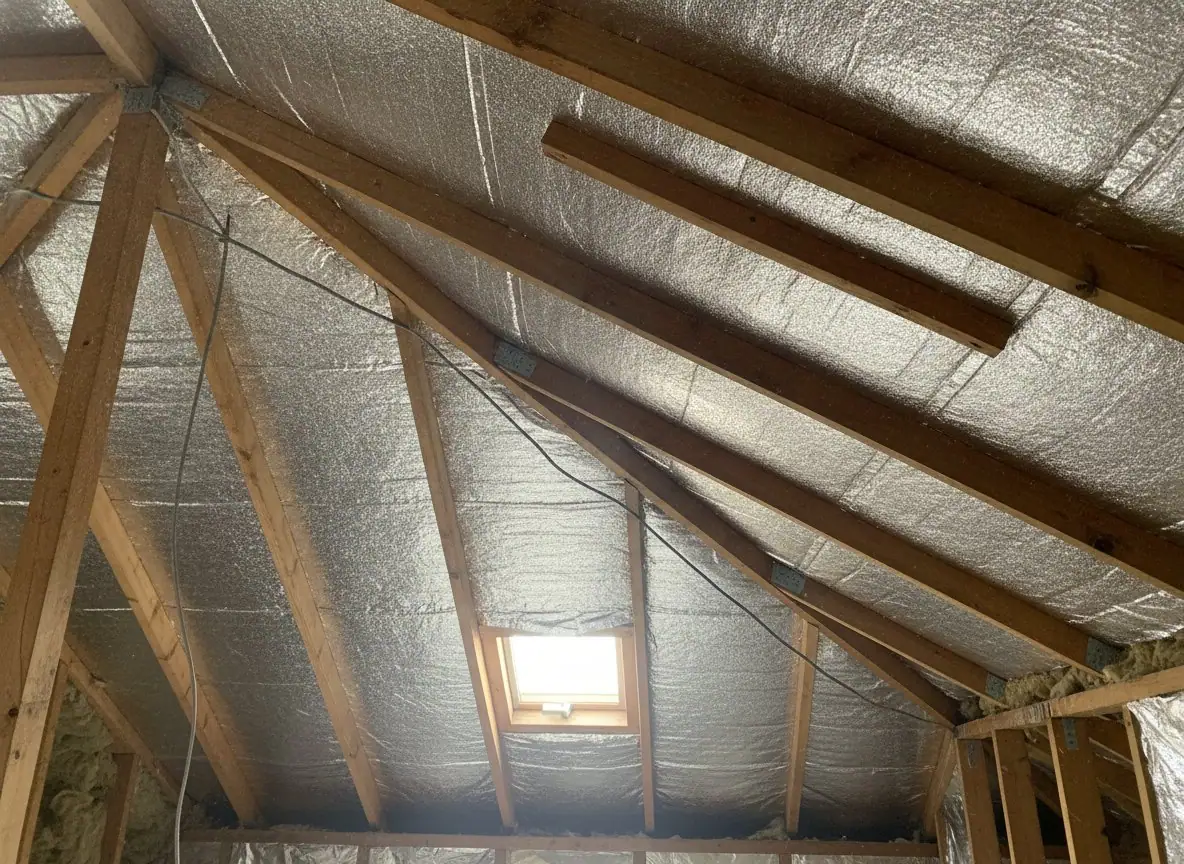
For attics with HVAC equipment and ductwork located within the attic space — common in post-1990 Hawthorne tract homes — insulating the roof deck (rafters) rather than the attic floor with mineral wool creates a conditioned attic that protects the HVAC system. Explore our full attic insulation services
Crawl Space Mineral Wool for Floor Cavities
Mineral wool batts installed between floor joists above unvented crawl spaces provide R-19 to R-30 in a single layer. The material’s moisture resistance makes it an ideal choice for Hawthorne crawl spaces that experience seasonal condensation from the marine layer. Learn about our crawl space insulation solutions
Hybrid Systems with Spray Foam
In some Hawthorne applications, we pair a thin layer of closed-cell spray foam (1 inch, approximately R-6) at the interior sheathing face for vapor control and air sealing, followed by mineral wool batts to achieve the full target R-value. Learn more about our spray foam insulation services
Mineral Wool Insulation Cost in Hawthorne, CA
Understanding the cost of mineral wool insulation in Hawthorne requires considering both material and labor variables specific to the Los Angeles South Bay market.
Typical Price Ranges
- Wall cavity batt installation (open stud bays): $1.80 to $2.80 per square foot of wall area, including materials and labor. A typical 1,400 sq ft Hawthorne bungalow with 8-foot ceilings may require 1,100 to 1,400 sq ft of wall insulation, resulting in a project cost of $1,980 to $3,920.
- Attic insulation (rafter or deck application): $2.20 to $3.50 per square foot. A 1,200 sq ft attic footprint typically runs $2,640 to $4,200.
- Crawl space floor cavity insulation: $1.90 to $3.00 per square foot of floor area.
- Continuous exterior mineral wool board (commercial): $3.50 to $6.00 per square foot installed, depending on board thickness and cladding complexity.
Read moreShow less
Factors Affecting Cost in Hawthorne
- Existing insulation removal: Add $0.50 to $1.20 per square foot if old insulation must be removed first. View our insulation removal and replacement services
- City of Hawthorne permit fees: Residential insulation permits typically run $150 to $350 depending on project valuation.
- Access difficulty: Homes with limited attic access or shallow crawl spaces (common in 1950s construction in Bodger Park) may incur a 10% to 20% labor premium.
- SCE rebates: Southern California Edison’s Energy Upgrade California program offers rebates of up to $1,500 for qualifying whole-home insulation upgrades, which can meaningfully offset project costs for Hawthorne residents.
Call us at (424) 487-4483 for a precise, no-obligation estimate tailored to your specific property.
Neighborhoods We Serve in and Around Hawthorne
Bodger Park
Located in the northwestern quadrant of Hawthorne, Bodger Park is dominated by homes built between 1945 and 1960. These properties feature the original 2×4 framing with shallow 3.5-inch wall cavities — ideal for R-15 mineral wool batts — and uninsulated crawl spaces that are highly susceptible to moisture from the marine layer. Many homes in this neighborhood are also within the HHR airport noise corridor, making mineral wool’s acoustic benefits particularly valuable.
Holly Glen
Holly Glen’s housing stock dates primarily from the late 1950s through the 1970s, with some custom-built homes featuring non-standard framing dimensions. Our team is experienced in cutting mineral wool batts to fit irregular 2×6 and non-standard-depth cavities found in this neighborhood’s varied architecture.
El Camino Village and Lawndale Border
The communities along the Hawthorne-Lawndale border near Prairie Avenue include a mix of mid-century single-family homes and 1980s-era apartment buildings. Multifamily buildings here often lack adequate party-wall insulation, making mineral wool a code-compliant and practical upgrade for landlords. View our full insulation installation services
We also serve Westchester, Carson, Compton, Culver City, Del Aire, El Segundo, Gardena, Hermosa Beach, Inglewood, Lennox, Manhattan Beach, Redondo Beach, Torrance, West Athens, West Carson, Westmont, and Willowbrook.
Mineral Wool Insulation Maintenance Tips for Hawthorne Homeowners
- Inspect attic insulation annually in October — before the rainy season — to identify any settling, displacement from attic ventilation airflow, or rodent disturbance. Hawthorne’s urban wildlife, including roof rats, is active in attic spaces year-round.
- Check crawl space insulation after heavy rain events. While mineral wool resists moisture, standing water in crawl spaces can dislodge batts from floor joist cavities. Inspect after any rainfall exceeding 0.5 inches, which occurs roughly 15 times per year in Hawthorne on average.
- Keep attic ventilation pathways clear. Ensure soffit vents along eaves are not blocked by mineral wool batts — use insulation baffles to maintain a minimum 1-inch air gap between insulation and roof sheathing.
- Monitor for signs of pest intrusion at wall penetrations and attic entry points, especially along the wood-framed soffits common in Hawthorne’s post-war construction.
- Schedule a professional thermal imaging inspection every 5 to 7 years to identify any thermal bypasses that develop over time as the building settles.
- After any major remodeling involving wall or ceiling work, have a certified insulation contractor verify that mineral wool batts were correctly reinstalled and that no air-sealing details were compromised during construction.
- Review SCE energy bills each September — peak cooling season — and compare to the prior year. A 15% or greater unexplained increase may indicate insulation failure or air sealing deterioration.
Why Choose Armour Hawthorne Insulation
Armour Hawthorne Insulation is a locally operated company serving the Hawthorne community and the broader South Bay region. We are not a national franchise dispatching unfamiliar crews — we are your neighbors, and we understand the specific construction challenges, building codes, and climate conditions that affect homes and businesses in Hawthorne, Inglewood, Redondo Beach, Torrance, and the surrounding communities.
Our team has hands-on experience with the full range of Hawthorne’s housing stock, from the post-war bungalows of Bodger Park to the newer mixed-use developments along Crenshaw Boulevard. We are knowledgeable in California Title 24 compliance documentation, City of Hawthorne permitting requirements, and Southern California Edison rebate programs — allowing us to help you maximize energy savings and minimize out-of-pocket project costs.
Read moreShow less
We offer free, no-pressure on-site assessments and transparent written estimates. Our comprehensive services include attic insulation, spray foam insulation, blow-in insulation, crawl space encapsulation, crawl space insulation, and insulation removal and replacement. Call us at (424) 487-4483 to get started.
FAQ
Frequently Asked Questions: Mineral Wool Insulation in Hawthorne, CA
How much does mineral wool insulation cost in Hawthorne, CA?
In Hawthorne, mineral wool insulation typically costs between $1.80 and $3.50 per square foot installed, depending on the application (wall cavity, attic, crawl space), accessibility of the area, and whether existing insulation needs to be removed first. A full attic insulation project for an average Hawthorne home (approximately 1,200 sq ft of attic floor area) generally runs between $2,640 and $4,200. Southern California Edison rebates of up to $1,500 are available for qualifying projects and can significantly reduce net costs.
Is mineral wool better than fiberglass in Hawthorne’s climate?
For most Hawthorne applications, yes. Hawthorne’s marine layer creates persistent morning moisture conditions that can degrade fiberglass insulation performance over time — wet fiberglass can lose up to 40% of its rated R-value. Mineral wool’s hydrophobic fiber structure retains its thermal performance in moist conditions, making it a more durable long-term investment for South Bay coastal climates. Its superior fire resistance and acoustic performance are additional advantages in Hawthorne’s built environment.
How long does mineral wool insulation installation take in Hawthorne?
Most residential mineral wool installation projects in Hawthorne are completed in 1 to 2 days. A single-family home attic project typically takes 4 to 8 hours. Wall cavity projects combined with attic work may require 2 full days. Commercial projects vary depending on building size and complexity. City of Hawthorne permit issuance, if required, may add 3 to 5 business days before installation begins.
Do I need a permit for mineral wool insulation in Hawthorne?
California Building Code and the City of Hawthorne’s Building and Safety Division generally require a permit for insulation work that involves changes to the building envelope or work related to new construction and major renovation. Simple like-for-like replacement of existing attic insulation may be exempt. We handle all permit applications and inspections on your behalf as part of our service.
Can mineral wool insulation help with aircraft noise from Hawthorne Airport (HHR)?
Yes, significantly. Mineral wool batts in a standard 3.5-inch wood-frame wall cavity can achieve Sound Transmission Class (STC) ratings of 45 to 52, compared to STC 35 for a typical fiberglass installation. For homes in the Bodger Park neighborhood and along 120th Street that fall within the FAA’s 65 dB day-night average noise contour for HHR, upgrading to mineral wool wall and ceiling insulation is one of the most cost-effective noise mitigation strategies available.
What areas near Hawthorne do you serve?
In addition to Hawthorne, Armour Hawthorne Insulation serves Westchester, El Camino Village, Carson, Compton, Culver City, Del Aire, El Segundo, Gardena, Hermosa Beach, Inglewood, Lawndale, Lennox, Manhattan Beach, Redondo Beach, Torrance, West Athens, West Carson, Westmont, and Willowbrook.
Is mineral wool insulation safe to handle and live with?
Modern mineral wool products manufactured after 1996 use fiber dimensions classified as “biosoluble” by the International Agency for Research on Cancer (IARC) — meaning they dissolve in lung fluid and do not pose the long-term health risks associated with older refractory ceramic fibers. During installation, our crew wears appropriate respiratory protection and eye protection. Once installed and enclosed behind drywall, mineral wool poses no ongoing health risk to building occupants.
How does mineral wool insulation perform during California wildfire smoke events?
When combined with proper air sealing — which is always part of our installation process — mineral wool insulation helps reduce overall envelope air leakage, limiting the infiltration of PM2.5 smoke particulates during events like the Palisades Fire (January 2025) and similar regional wildfire episodes that periodically push AQI readings in Hawthorne above 150. While insulation alone is not an air filtration system, a well-insulated and air-sealed home demonstrably maintains better indoor air quality during smoke events compared to a leaky, under-insulated structure.
Ready for Better Comfort, Lower Bills, and Quieter Spaces in Hawthorne?
Whether you’re dealing with high summer energy bills, aircraft noise from HHR, cold floors from an uninsulated crawl space, or simply want to bring your Hawthorne home up to California Title 24 standards, Armour Hawthorne Insulation is ready to help. We provide free on-site assessments, transparent written estimates, and professional mineral wool insulation installation using the materials and techniques best suited to Hawthorne’s South Bay climate and building stock.
Call us today at (424) 487-4483 to schedule your free assessment. Our team serves Hawthorne and all surrounding South Bay communities, and we’re ready to help you make your home or commercial building more comfortable, efficient, and quiet — starting this week.
Contact us online to request your free estimate
Get in touch
Find insulation help near you
Request a free estimate online or give us a call — our team will follow up quickly.
- Call us(424) 487-4483
- Visit3355 W El Segundo Blvd, Hawthorne, CA 90250
- HoursMo-Su 07:00-19:00